
By: Michael Sapenoff
This article was originally published in June of 2019
One night, during a time in my life when I had a lot more time on my hands, I tried watching the film ‘Blade Runner’. The motivation for which was to complete this film, so I could watch, and ostensibly understand, the newer and aesthetically gorgeous ‘Blade Runner 2049′. For several reasons, I was unsuccessful in my efforts to complete the film. It wasn’t so much that the film was bad, after all, I know it has a relative cult following, but it was incredibly abstract and difficult to get into, and time constraints on my end forced me to abandon the effort. I was clearly missing something so I started reading about the film, and in subsequent research discovered that it was inspired by source material written by Philip K. Dick, more specifically, his seminal work Do Androids Dream of Electric Sheep. I had heard of Dick before (please, let’s keep this mature going forward), and had heard of several of his titles, including Minority Report and A Scanner Darkly, both of which were turned into successful movies. Realizing that Dick was responsible for such significant contributions to science fiction, I sought out his work in hopes of discovering something more about the genre, and presumably the future. Likewise, I figured that reading Do Androids Dream of Electric Sheep would in some way help me to appreciate and understand ‘Blade Runner’ on a deeper level, a desire which remains unexplainable at this time and date.
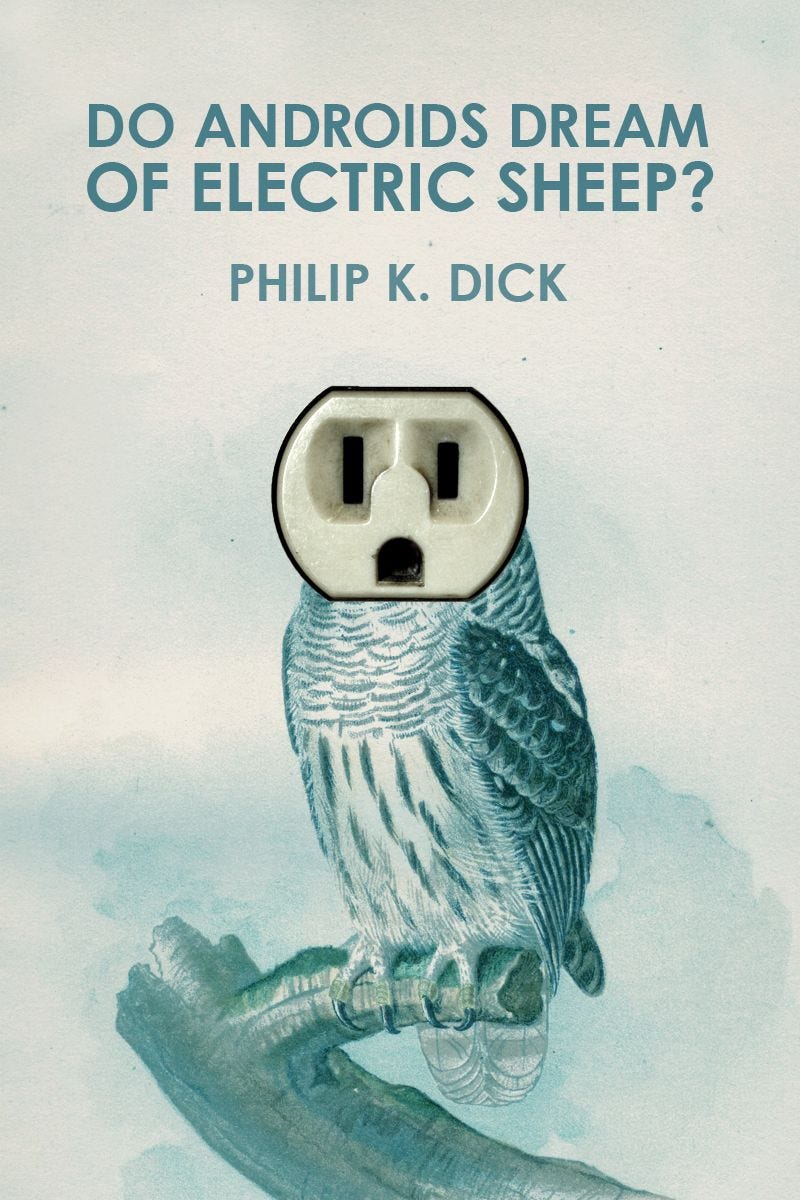
I quickly dove into Do Androids with the hope of knocking it out in a day or two. Two things hit me almost immediately. First, to say that ‘Blade Runner’ was inspired by Do Androids is incredibly generous. In fact, it really only took one or two major concepts away from the book. The rest is almost completely different. To say ‘Blade Runner’ is inspired by Do Androids is akin to saying Niagara Falls is inspired by a small backyard Koi pond. Second, this book is incredibly outdated. The science fiction read like…well, a man who was trying to come up with futuristic terminology in the early 60s. Guns became laser tubes, bounty hunters rode around in hover cars, and sheep were….they were electric sheep. As someone who isn’t overly familiar with science fiction, the whole thing threw me off in a way that made it difficult for me to get into the book. I appreciated the things that Dick had to say about humanity, the dangers of AI, and the ethical responsibility of science and technology, but all of those topics were deeply encased in cringe-inducing terminology and phraseology. As I read, a few questions came to mind: what’s the value of reading science fiction that is so outdated? Why do we still hold up a book that so clearly got significant parts of the future wrong? Doesn’t that in a way make the author wrong?
However, those questions started to feel less imposing and important as I continued reading. As Dick addressed issue after issue that we’re still dealing with today, I realized that something different was happening here, something significant was occurring. Maybe Philip K. Dick didn’t nail what type of car we’d be driving in the future, and maybe bounty hunters aren’t running out and retiring “Andys” with laser tubes, but we are dealing with issues regarding the lack of human empathy, the dangers of AI and associated ethics issues, and most significantly the idea of a corporation acting as an individual while exploiting human rights to make enormous amounts of money while at the same time putting large swathes of society in the way of almost unknowable and imminent danger. So while the language itself remains outdated, the ideas are not.
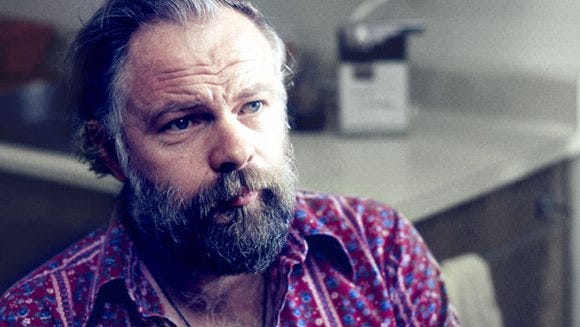
That’s what I ultimately came to realize, that it’s not the responsibility of science fiction writers to come up with futuristic language that will never be outdated, and they’re certainly not responsible for correctly predicting the future. To simply pursue correct predictions would be to leave behind authentic literary pursuits and instead focus on some vapid speculative form of futurism. Instead, Dick writes fiction that focuses on the human condition, timeless struggles that any person from any year would be able to recognize. The things he focuses on, like the value of human life, what it actually means to be human, and how we treat the marginalized of society are universal. Dick simply made the creative decision to tackle these topics through the lens of science fiction. Moreover, it’s actually likely that in order to address these ideas to this degree, he had to use science fiction. Plus, this artistic decision proved to be fruitful. Science fiction allows a writer a unique opportunity: Dick can provide future readers and societies with a warning. Where Dick separates himself from the pack of science fiction writers who sell their cheap paperback books in large corporate bookstores for seven dollars is the fact that his warnings turned out to be so pertinent. The problems Dick discusses, and the subsequent warnings he delivers are issues that we’re all too familiar with today, and will still be familiar with, unfortunately, decades from now, unless we choose to heed the warnings that he so generously provided. So in a sense, science fiction is abundantly valuable, even if it’s outdated. Regardless of whether or not the terminology he used was right or wrong, the ideas that form the foundation of Do Androids Dream of Electric Sheep make a timeless warning worth reading no matter the year.
 Yellow Letter K